THE AIR WE BREATHE: Christian Community & The Way We Are Together
I'll be honest. I nearly didn't share the articles coming up soon. Partly because writing it means putting my head above the parapet, and awkwardness can follow :-) But also because my own story is tangled up in all of this in ways that are not entirely flattering to me. But something kept niggling at me. That persistent, won't-quite-go-away kind of prompting that I have learned, over the years, to take seriously - even when I'd rather not. So here we are.

Listen without Rushing
In everyday life, discernment involves learning to listen well: to God, to our own inner movements, and to the realities of our circumstances (James 1:5).

Faith, the Arts and the Prophetic
Engaging with the arts can support the kind of attentiveness needed in listening to and responding to God.

Gifts, Calling, Integration
God equips people with gifts, but gifts alone do not make a life or a ministry sustainable. Callings develop in relationship—with God, with self, and with the communities we serve (Ephesians 4:11-13).
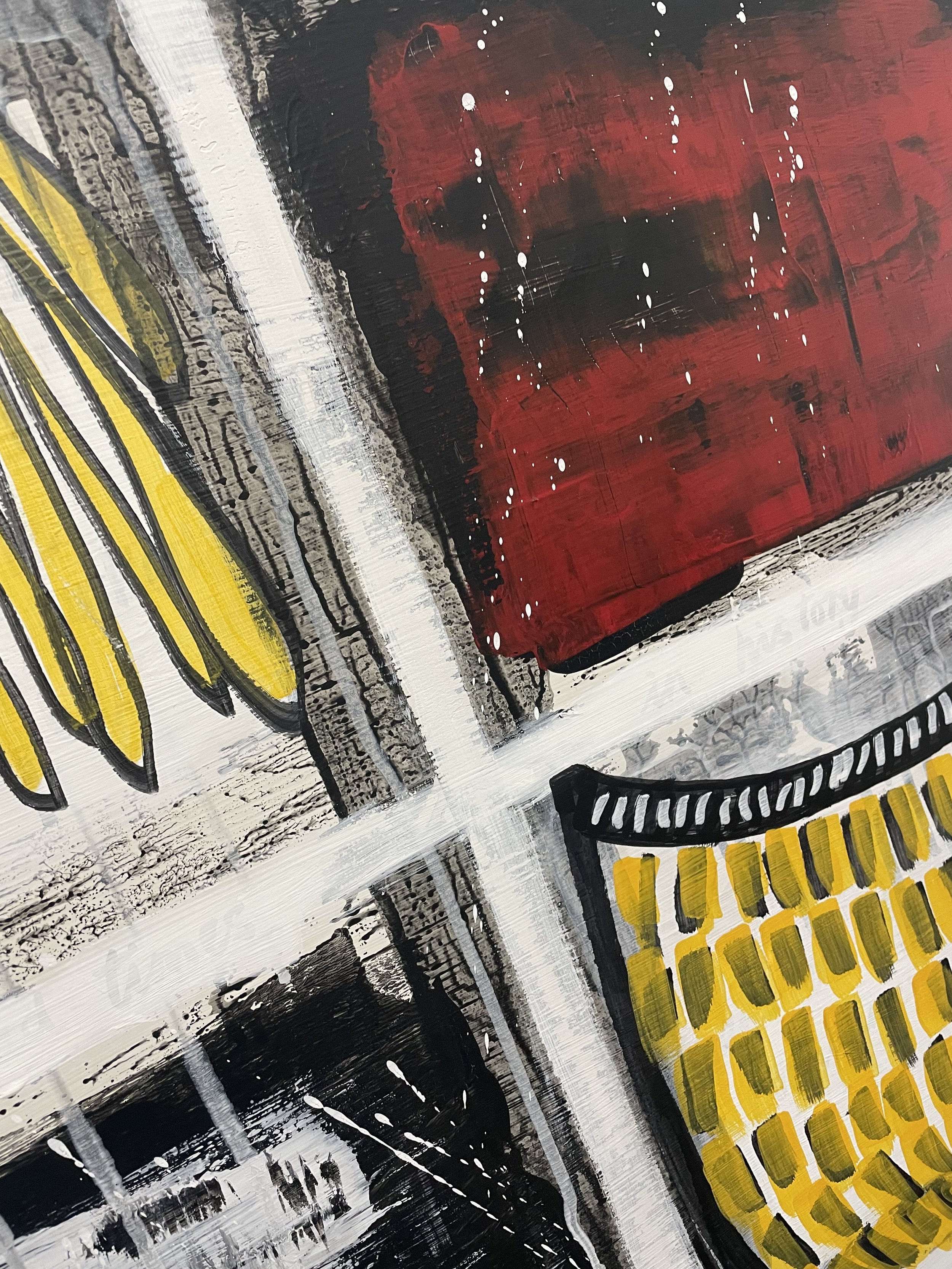
Healing through Making and Meaning
Art-making allows people to externalise inner experience, to see, shape, and relate to what they are carrying.

Character Shapes Calling
Personhood (our capacity for self-awareness, humility, emotional maturity, and relational integrity) is foundational. Without it, gifts and callings can become distorted: prideful, misused, or misdirected. Peter’s letters, for example, repeatedly link leadership and service with character and faithfulness (1 Peter 5:2-3).

Prophetic Attention
The prophetic is often associated with strong words or dramatic moments, but at its core it is a practice of attention (Amos 3:7).

Leaders - the Inner Life
Healthy leadership grows from an integrated inner life, where emotions, beliefs, calling, and limits are acknowledged rather than denied (Proverbs 4:23).

Healing - a Relational Journey
In the Gospels, Jesus frequently engages people in conversation before healing occurs. He asks questions. He notices faith, fear, resistance, and hope. Healing happens within relationship, not apart from it (Luke 8:43-48).

God is Present: Learning to Live from Availability, Not Absence.
God Is Present: Learning to Live from Availability, Not Absence
One of the quiet struggles many Christians carry is the sense that God is distant, available at certain moments, but largely absent from the texture of everyday life. We pray, we believe, and yet we often live as if God must be summoned or persuaded to show up.
The Christian story tells a different truth. From the opening lines of Scripture, God is portrayed as present, engaged, and relational, walking in the garden, speaking, responding, and making space for relationship (Genesis 3:8). In Jesus, this presence becomes embodied and local. God does not remain abstract or removed, but steps into ordinary life, sharing meals, emotions, conflict, and joy (Matthew 1:23, John 1:14).
God’s presence is not fragile. It does not depend on our intensity, our words, or our spiritual competence. What often does need attention is our capacity to notice (Psalm 46:10).
Faith, in this sense, is less about generating belief and more about learning attentiveness. Jesus regularly speaks about those who have eyes but do not see, ears but do not hear, not as a rebuke, but as an invitation (Matthew 13:13-15). God is already near; the work is learning how to be present ourselves.
This kind of attentiveness takes time. It grows through patience, practice, and willingness to slow down. It is shaped in prayer, but also in the ordinary, in work, relationships, creativity, grief, laughter, and rest (Luke 10:38-42). God is not confined to sacred spaces. The earth itself is described as full of God’s glory, if we are willing to notice (Psalm 19:1).
Living from God’s availability rather than God’s absence changes the tone of faith. It softens anxiety, reduces striving, and makes room for trust. Over time, it helps us live less driven lives grounded in relationship rather than performance (John 15:4-5).