
WAYFINDING Part 6
Our contemporary culture presents a fairly negative view of later life, but Scripture presents a very different picture. The biblical story does not suggest that our usefulness ends when our productivity decreases. Instead, it honours the mature gifts that emerge through a life faithfully lived. Elderhood is not simply the final chapter before the end. It is a significant season in which wisdom, perspective, faithfulness and blessing can become deeply fruitful.
WAYFINDING Part 5
Limits are not failures. They are part of God’s design. The boundary of a garden does not restrict the garden; it creates the space where something can grow. Our limitations, our particular gifts, our responsibilities and our season of life all help define where we are called to invest ourselves. Every yes contains many noes. To say yes to one calling means recognising that we cannot give ourselves fully to everything else.

WAYFINDING Part 4: Navigating Transition
Transition requires both honesty and hope. Honesty about what has changed. Honesty about what has been lost. Honesty about our fears and uncertainties. But also hope that God is not finished. Because the end of one season is not necessarily the end of our usefulness, our purpose or our fruitfulness. Sometimes it is the beginning of a deeper expression of who God has always been forming us to become.
Wayfinding Part 3: Led By God’s Word - Jill Smith
There are moments in life when we need direction. A decision needs to be made. A season is changing. A familiar pathway is closing. A new opportunity appears. We find ourselves asking, What should I do? Where should I go? How do I know which way is right? These are deeply human questions.
Throughout Scripture, people have faced moments like these. Abraham leaving his homeland. Moses standing before the burning bush. Samuel learning to recognise God’s voice. Mary receiving an unexpected invitation. Paul changing direction because the Spirit redirected his plans. Time and again, the people of God learned that they were not simply navigating circumstances. They were walking with a God who speaks and invites relationship.
WAYFINDING Part 2: Every Season Offers Gifts and Tasks
One of the things I have noticed, both in my own journey and in walking alongside others, is how easily we can become impatient with the season we are in. We look backwards and long for what has been. Or sideways, comparing ourself with where others seem to be. We look ahead and imagine that fulfilment will finally come when we reach the next thing.
WAYFINDING: Navigating Life With God - Part 1
There are seasons in life when we seem to lose our bearings. Nothing dramatic may have happened. We haven’t necessarily lost our faith, our family or our sense of purpose. Yet something has shifted. The map that served us well for years no longer seems to fit the terrain beneath our feet.

Following the Thread Part 7
Revelation 19:10 has become a kind of plumbline for me through all of this. The testimony of Jesus is the spirit of prophecy.
The deepest purpose of the prophetic gift, and I think of every gift, is to make Jesus more visible. More present. More known. Every gift, in its right place, points beyond itself to him.
When that’s true, when prophecy strengthens and encourages and comforts, when leadership serves and releases, when apostolic gifting plants and sends and equips, when the whole body’s functioning with every part contributing, the church is doing something extraordinary. Not because of the authority any of us carry. Because of who we’re all pointing to.
That’s the vision the New Testament’s been showing us all along. And I think it’s closer than we’ve imagined.
The thread has led us here. And here, it turns out, is home.

Following the Thread Part 6 of 7
A gift is something the Spirit gives. Plain and simple, and not up for negotiation. Prophecy, apostolic calling, teaching, the rest of it, these show up in a person the way the Spirit decides, not the way a church structure decides. Paul’s lists in Romans 12, 1 Corinthians 12, and Ephesians 4 all describe gifts this way. Given. Distributed. Sovereign. You don’t apply for a prophetic gift, and you don’t earn an apostolic calling through service hours. It’s simply present, or it isn’t.
A role is different. A role is something a community recognises, tests, and confirms over time. Elder. Overseer. Recognised local leader. These aren’t given in the same instant, sovereign way a gift is. They’re grown into, watched for, and named by people other than the person carrying them.
Following the Tread Part 5 of 7
Most of us in charismatic and apostolic circles could quote Ephesians 4:11 fairly readily. Apostles, prophets, evangelists, pastors, teachers. The five fold. It’s become one of the foundational texts for how we think about church structure and spiritual authority.
But I wonder if familiarity’s made us read and apply it to what we know a bit too quickly. As I’ve followed the scriptural thread more attentively, what I found doesn’t quite fit the kind of spiritual hierarchy or organisational chart I’ve often experienced.
Following the Tread Part 4 of 7
Boundaries enable freedom, limits provide focus, respecting the purpose, boundaries and limits of prophecy provides both the speaker and the hearer with as process that honours the power and potential of the gift and positions the church to be encouraged and grow together.

Following the Thread Part 3 of 7
Have you ever walked into a room and felt, before you could name it, that something was a bit off? Not wrong exactly. Not broken. Just not quite level. Then you look, and there it is. A picture hanging at a slight angle. A table sitting unevenly on the floor. Something small enough you’d walk past it a hundred times without noticing, and once you see it, you can’t unsee it.
I think something like that has happened, gradually and without anyone particularly intending it, in the way some parts of the church have come to talk about authority and prophecy and spiritual power. Not a dramatic collapse. More a picture that’s hung at a slight angle for so long we’ve got used to it.
Following the Thread Part 2 of 7
I’ve been thinking about Peter.
Not the version in the stained glass windows, composed and certain, holding his keys. The real one. The one who keeps lurching through the Gospels in ways that make me wince and love him at the same time.
He’s recognisable, that’s the thing. Passionate and impulsive and sincere, all at once. The one who steps out of the boat and then panics. Who calls Jesus the Messiah and then, minutes later, gets called Satan for missing the point completely. Who promises he’ll never abandon the man he loves, and then does. Three times. In a courtyard. By a fire. To a servant girl.
I think Peter’s journey from that courtyard to Pentecost is one of the most honest pictures in Scripture of where real spiritual authority comes from, and what it costs to carry it well.
Following the Thread Part 1 of 7
Some years back I was in prayer, and I found myself lifted, somehow, up above Aotearoa, looking down over our three islands from a vantage point I’d never had before. It felt like being held securely in the Lord and looking back from heaven’s perspective.
What I noticed, looking down, was the mountain spine. That long ridge of high country running the length of the nation, the backbone of these islands. And as I watched, God moved. He brought his foot down on that spine, and these words came with the weight of it:
I am breaking the power of the spirit of control, and the tyranny of technique.
There was no judgment in it. No condemnation of us as a people, or of the church. What I felt was love. Fierce, tender, determined love for this nation and its people. And underneath the words, the cry of his heart:
Let my people go.
He wants us free. That’s where this starts.
Part 6 - Estuary Reflections - Glory
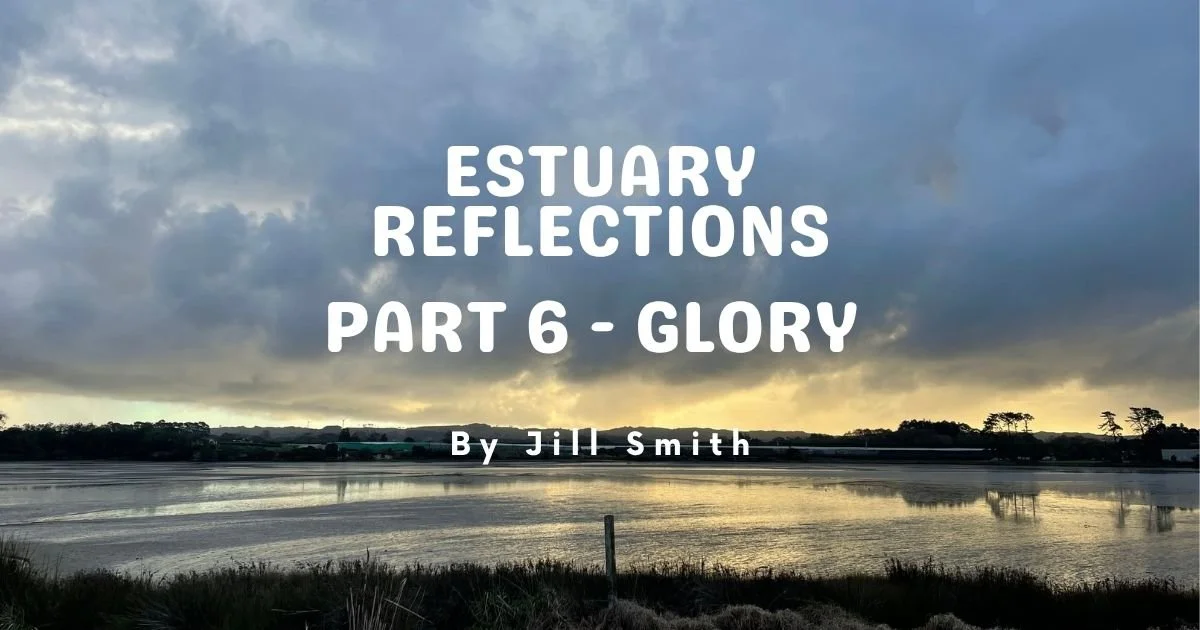
There are mornings when the water goes completely still.
No wind. No tide-pull strong enough to disturb the surface. The estuary becomes something else entirely on those mornings. Something almost impossible to describe without sounding as though you have invented it.
It becomes a mirror. Sea reflects sky as if heaven is reflected on earth.
The estuary does not manufacture the sky. It does not produce the light. It has no capacity to generate what it reflects. It simply becomes still enough, clear enough, undisturbed enough to hold what is above it and send it back into the world.
I wonder if this is one of the most beautiful pictures of what the church is for. Not to perform heaven. Not to produce it. Not to manufacture glory from our own resources. But to become, by grace, still enough to hold it. Clear enough to show it. Undisturbed enough by anxiety and self-concern that what is above us can be seen in us.
Estuary Reflections Pt.5 Transformation
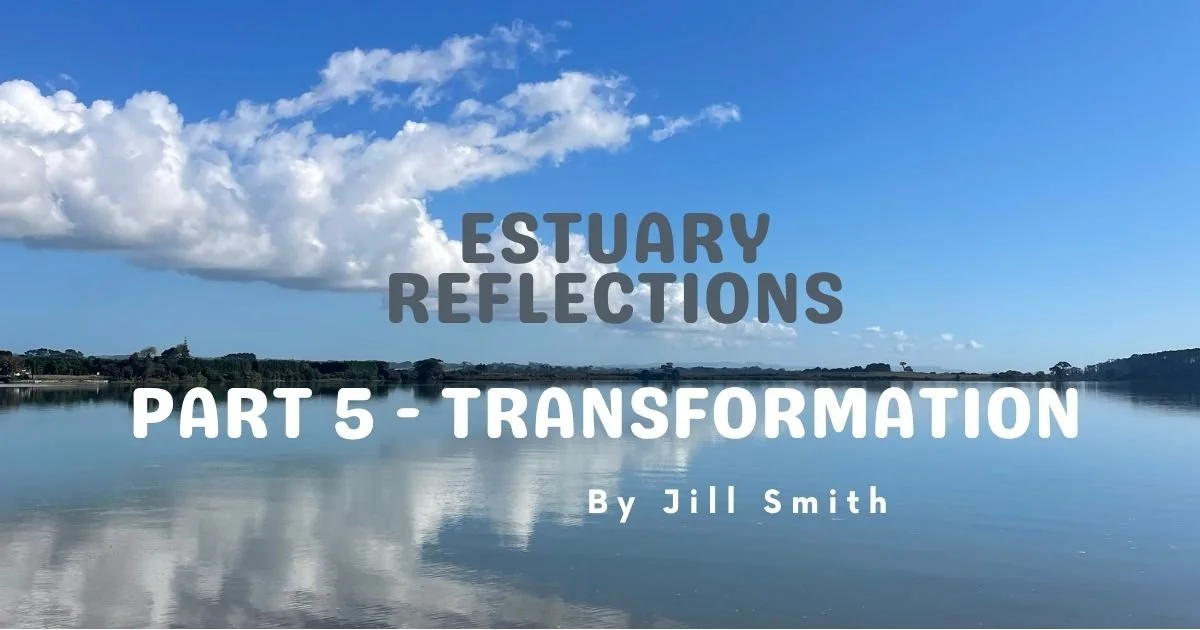
The estuary offers a different kind of faithfulness. Day after day receiving what comes. Giving what it has. Quietly purifying, sustaining, making life possible in ways that no one is there to celebrate or record.
The deepest transformations usually happen beneath the surface. I believe this about the natural world, and I believe it about the human soul. Usually the most significant things that happen in my life, I don’t feel happening. It happens in the way that roots grow, in the way that yeast works, in the way the tide slowly reclaims a mudflat: gradually, then all at once, and more often than not, only visible in retrospect.
God seems content to work like the estuary. Present everywhere. Dominating nowhere. Changing everything. Announcing nothing. Taking time.
Part 4 - Estuary Reflections - Diversity
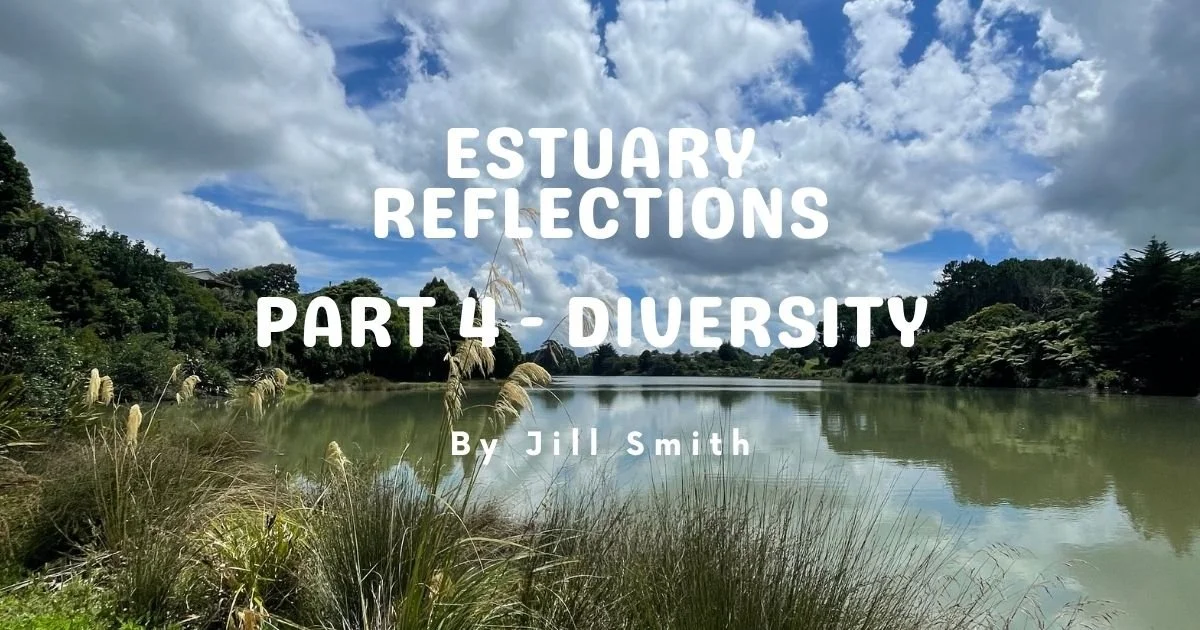
I’ve been paying attention to the birds.
Not in any systematic or scientific way. I could not tell you the Latin names of anything I see. But I have noticed something that keeps drawing my attention to something quite remarkable: no two species of birds use the estuary in the same way.
Each one has arrived at the estuary for similar reasons: food, shelter, rest. But each one draws life from this place in its own particular way.
And the estuary welcomes them all.
Part 3 - Estuary Reflections - Growth
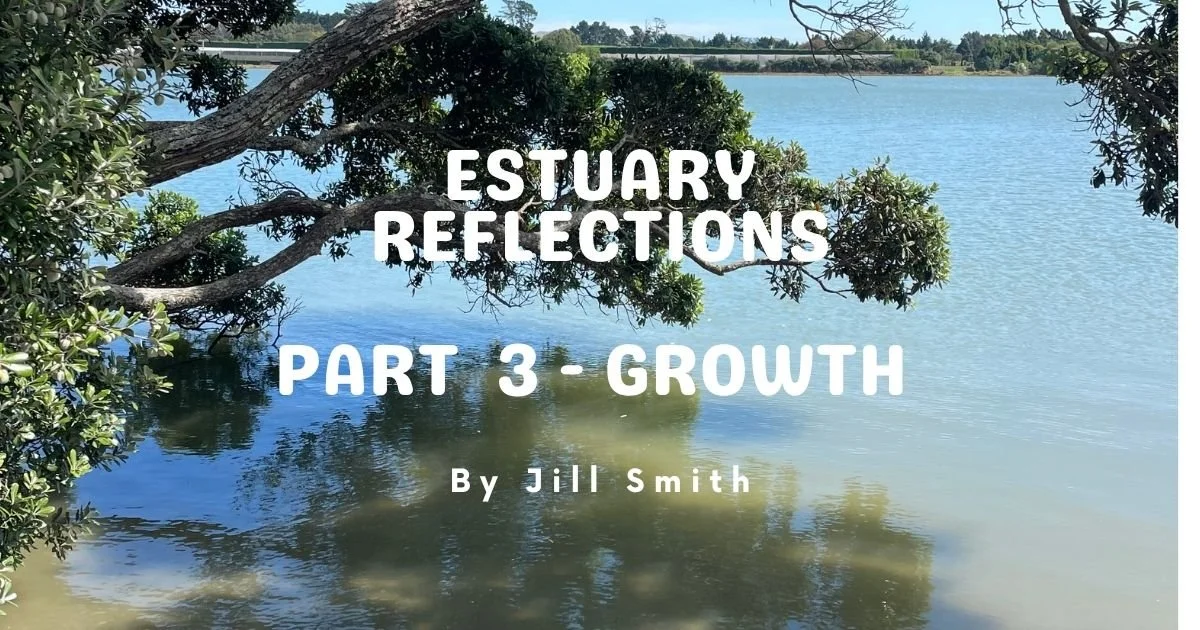
We are instinctive accumulators. We gather and hold and store. We are made anxious by the outgoing tide, by the season of emptiness, by the strange flat expanse that appears when what we had before seems to have been taken away. We build walls and clutch at things and make plans against scarcity. And all the while the estuary quietly demonstrates another way.
Jesus talked about this more than almost any other subject. Not because he wanted people to be reckless or indifferent to the real needs of life, but because he seemed to see something his followers missed. He pointed to birds who neither sow nor reap. He pointed to flowers that neither toil nor spin. He seemed to be asking a single patient question: do you trust the one who made you?
Part 2 - Estuary Reflections - The Rhythm of Grace
The estuary breathes.
I have noticed this more than almost anything else. It is not a static place. It does not hold its water the way a lake does, contained and still. It rises and it falls. Twice each day the tide advances. Twice each day it retreats. The mudflats appear, grey and glistening and alive with movement. Then the water returns and covers them again.
Nothing resists. Nothing clings. The whole place simply yields to a rhythm older than itself.
Part 1 - Estuary Reflections - Belonging
Over time I have come to think of the estuary as a kind of living parable. A place where creation quietly whispers truths about the Kingdom of God. One of the first things that strikes me about an estuary is that it is a meeting place. Fresh water arrives from rivers and streams that have travelled down from hills and valleys. Salt water pushes inland from the sea. Two different worlds meet here. Yet neither ceases to be what it is. The river does not become the ocean. The ocean does not become the river. Instead, they create together a place of extraordinary life. Perhaps that is one reason estuaries teem with abundance. Life flourishes in the place where different things learn to belong together.
Part 8: Free to Flourish
I'm not an expert on organisational transformation. I don't have a programme to offer or a set of principles that, if implemented correctly, will fix what's broken. I've simply had a glimpse of something. In scripture, in the lives of people I know, in odd unexpected moments inside communities that have been deeply imperfect but where something real and lovely broke through anyway. A quality of life together that I've tasted enough of to know it exists, and to know it's what we were made for. And I've been nudged by the Spirit enough times, in enough different ways, to believe that what I've glimpsed isn't just a nice idea. It's a genuine possibility, even for communities that might seem far from it right now. That's all I'm bringing here. A glimpse, and a stubborn refusal to stop hoping and believing.